
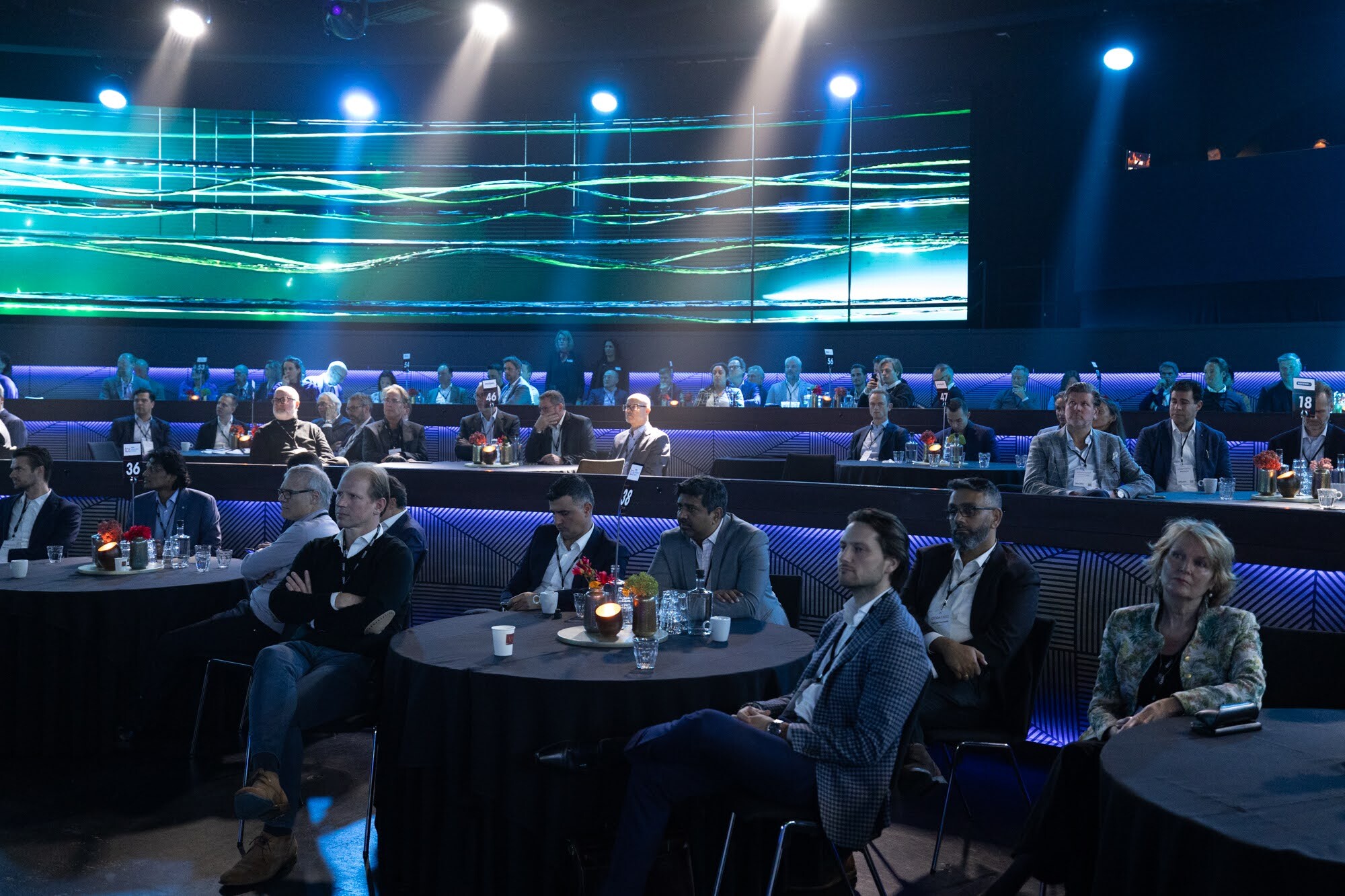
CIODAY is the annual network event for digital decision-makers in business, government, and everything in between. Not necessarily about the latest tech, this event brings together the community of CIOs, CDOs, and CTOs to share ideas, use cases, and best practices in an informal but luxurious setting. And, of course, we’ll announce the CIO of the Year 2023 and the winner of the Tech Hero Award.
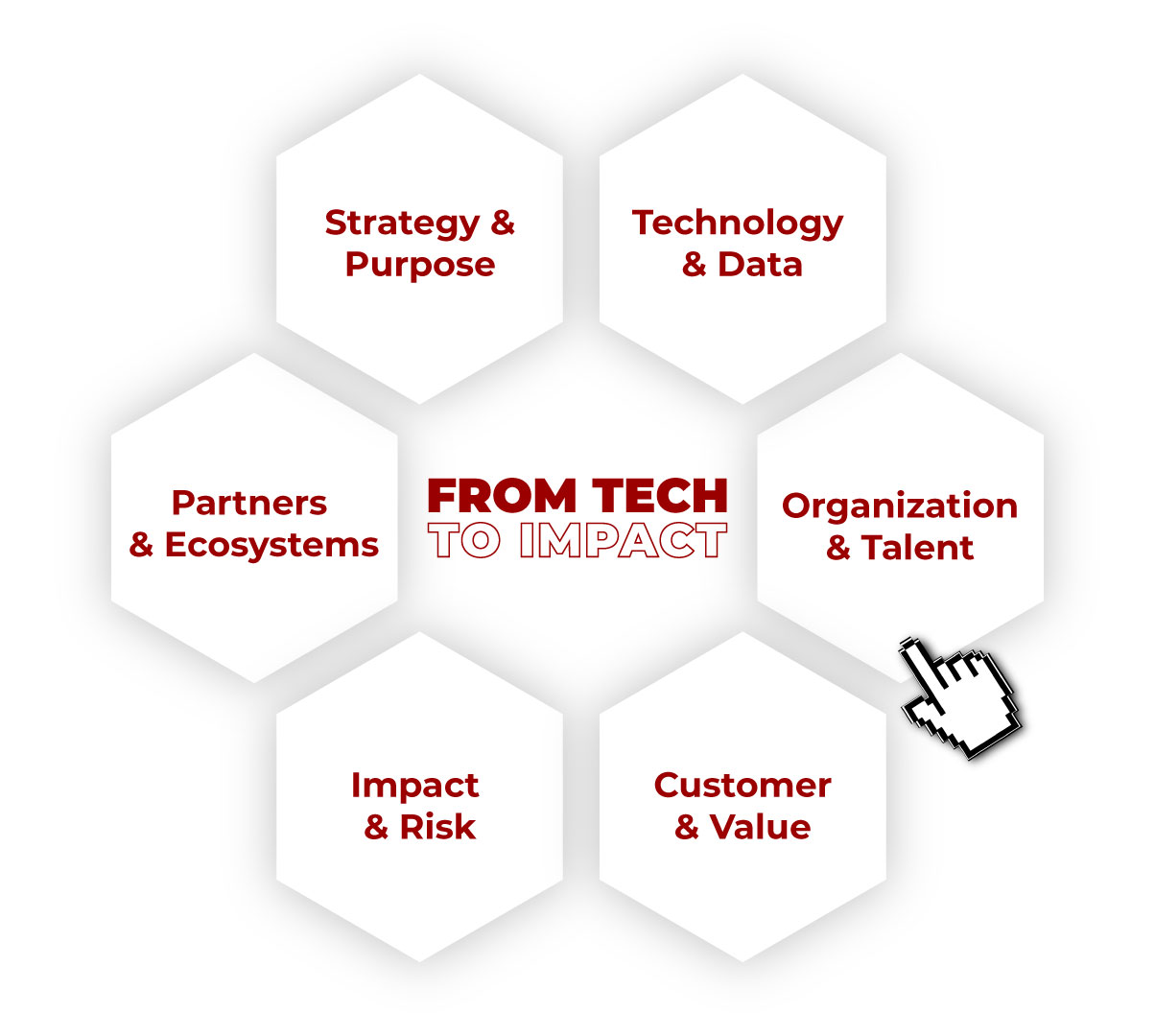
This year’s theme is From tech to impact in the AI era. In the years to come, we will use digital solutions and data more than ever to create things, personalize experiences, and operate more appropriately and securely. For CIOs, CTOs, CDOs, and other tech leaders, the shift is noticeable: from primarily achieving the right technological conditions to generating tangible business results. During CIODAY we will take a deeper look at emerging intelligent, business-focused capabilities. Based on the principle that these must be properly aligned with technological, operational and organizational realities. And with ethical guardrails in place to avoid accidents. Only then can you fulfill a lasting impact and long-term value for your organization.


Studio 21 - Hilversum

21 November 2023

C-level executives

Updates

Optimizing over innovating: a key strategy with the end goal in mind
How do you choose the right innovation strategy? How do you move away from legacy systems? And how do you strike a balance between cybersecurity and user experience? These are important questions for any business – even more so for financials. I spoke with Sebastiaan Kalshoven, IT Director and CTO at de Volksbank.

Operating services reliably and securely at scale with SRE
Site Reliability Engineering (SRE) has been a go-to method for improving highly scaled platforms’ reliability, efficiency, and security for almost two decades. Yet, this methodology is not as well-known as DevOps, which is related. Vladyslav Ukis, Head of R&D at Siemens Healthineers, has authored a book on the topic. We asked him about SRE, digital transformation, DevOps, cybersecurity, and how to communicate SRE’s benefits to upper management effectively.

What is digital maturity, and why does it matter?
Stemming from the Latin ‘digitus’, the word ‘digital’ has certainly seen some fluctuations in meaning and popularity over the years. From its initial use in audio media, the word seems to have evolved and shifted in definition, and is now omnipresent within business...
Damen implements 3DEXPERIENCE platform to achieve digital transformation
Striving to be the most sustainable and connected shipbuilder in the world, family-owned Damen Shipyards Group transforms its approach to shipbuilding by implementing the 3DEXPERIENCE platform. The company uses Designed for Sea and Build for Sea industry solution experiences to standardize its processes across its organization starting with Naval and Workboats divisions. The platform will serve as the backbone for product lifecycle management, integrating design, engineering, manufacturing engineering within a single, connected digital environment.

The keys to high performance
In this report you’ll find the digital leadership skills that organizations and their non-executive boards need to build a successful digital platform to drive high growth. Which specific competencies do digital leaders from HPO’s have over LPO’s? Contact Amrop if you want more information.

Aart Rupert (Damen) wins CIO of the Year Award
Aart Rupert, CDO of Damen, is the winner of the CIO of the Year Award 2023. He owes the award to his strategic vision for digitalization, the transformation he has initiated, and the launch of a new business unit (Damen Triton). CM.com won the Tech Hero Award.
Putting the “real” in real-time data
Imagine a platform that sees no traffic at all, and then, all of a sudden, three million connections per second are coming in for fifteen minutes, after which the traffic drops to almost zero. It looks just like a DDoS attack but isn’t. It’s the voting traffic for the Eurovision Song Contest. The small, young company behind the platform, Once.net, could not have asked for a better example to showcase its capabilities.

Announcing UiPath Autopilot™: Your partner for AI at work
Autopilot for Assistant is an AI companion that helps you tackle your daily task list. It securely blends the best of Generative AI and Specialized AI to work with a wide variety of systems and documents and take real action.

It’s time to unshackle our supply chains
We stand at an inflection point where data, generative AI, and the cloud converge, opening up unfathomable possibilities for the future of supply chain. Just imagine the transformative potential when we harness these emerging technologies. They have the power not only to change how supply chains are run but also to reinvent global commerce altogether. We have the opportunity to turn uncertainty into advantage.

The state of customer experience (CX)
IDC & Zoom reveal in this infographic how leading European companies are reshaping customer experiences.

Unlock the true potential of AI with RPA: eight steps to success
AI-powered automation represents an enormous opportunity for executives and C-suite, given the exponential business value it creates. Realizing that value has been far more challenging. Executives are faced with creating a strategy for a technology few fully understand. While the gap between high-performers and everyone else is growing. This eight-step approach provides you with a plan to unlock the true value of AI through automation.

State of the DEX Industry
Back in 2019, Digital Employee Experience (DEX) was still a novel idea, popular among only a few select companies. Then the pandemic hit and suddenly, IT had to endure a steep learning curve. Four years later, we asked 2,000 IT Decision-Makers (ITDMs) and Office Workers: What’s changed? What’s the same? Where’s the DEX industry heading?

Four ways the C-suite can ensure cloud governance
A good cloud governance and compliance program is fundamental to securing the business critical assets of an organization as it provides a broad approach to managing cyber risks and enables organizations to proactively meet their security and compliance objectives. Throughout this article we look at the four key actions boards can implement to ensure cloud governance and compliance for their organizations.
Experience Everywhere Nexthink Keynote
How Nexthink’s suite of new products harness new, smarter technologies to push IT forward.

Unlocking the future of work: what you can expect from Jens Löhmar at CIODAY
Workday CTO Jens Löhmar promises to delve into the transformative power of artificial intelligence and machine learning in finance and HR at CIODAY. We explore what to expect from this session.

IT becomes tech
Within organizations, IT is increasingly integrated into business units. The primacy no longer lies with IT. While IT mainly supported traditional business models and – if all went well – made them more efficient, the influence of tech is the other way around: it generates complete business outcomes. In short: tech creates impact.

Bringing balance to the data center
At Hitachi Vantara, we pride ourselves on being 60 years in the IT industry. We have learned that everything, even IT architectural trends, have a season. Sustainability is more than a trend but has come to the forefront of many company board minutes and should be a driver for responsible IT architecture. That’s not always been the case and we are looking to redress that balance.

Elevating human potential in your organisation with AI: A CIO’s Guide
How can CIOs leverage AI within the human resources (HR) domain to enhance the full potential of their workforce and drive success? Jens Lohmar explains.

How to unlock value in your sustainable business
Businesses around the world are feeling the burden of having to take on new sustainable practices in their operations — and that includes the maritime industry. But what if we reframe that thinking and look at sustainability as a business opportunity instead?

Zaheer Sacranie (XXImo): “Technology and changing mobility needs are driving our expansion”
Business mobility management provider XXImo aims to revolutionize flexible, sustainable, and borderless travel for employees across Europe. We have an extremely high ambition, says CTO Zaheer Sacranie, nominated for the Tech Hero Award.

Are you prepared for the future of work? Or not?
According to a recent Workday report 73% of business leaders feel increased pressure to adopt AI and machine learning (ML). There are three key barriers to their progress: ensuring that AI is based on high quality data, establishing clear use cases, and addressing the skills gap. Jens Löhmar explores these challenges.

Albert van Veen (FastID): “Decentralized identity is easier and more secure”
FastID owns a biometric technology that makes identity verification fast and flawless and allows consumers to manage their digital identity decentrally. But explaining the technology and gaining trust takes time, says CIO Albert van Veen, nominated for the Tech Hero Award.

Safety by ubiquity
To make the Internet inherently safer, it pays to protect as many companies as possible with a handful of effective measures at no extra cost. That’s the philosophy of Cloudflare, which routes traffic to and from one-fifth of all websites on the Internet and handles about 46 million HTTP requests per second on average.

Jeroen van Glabbeek (CM.com): “Our company is technology”
CM.com is constantly finding new practical applications for the technology it develops. The big task is to deploy the solutions in such a way that they actually contribute to society, says CEO Jeroen van Glabbeek, who was recently nominated for the Tech Hero Award.